Forensic Nursing in India: An Emerging Specialty for Justice and Care
Forensic nursing is a rapidly growing specialty in India that bridges healthcare and the legal system to provide compassionate, evidence-based care to victims of violence, trauma, and medico-legal cases while ensuring proper evidence collection and documentation. With rising crime rates, increasing awareness of gender-based violence, and recent curriculum reforms by the Indian Nursing Council (INC), forensic nursing now holds significant promise for strengthening India’s medico-legal framework and improving patient outcomes.
What Is Forensic Nursing?
Forensic nursing applies forensic science alongside the biopsychosocial education of registered nurses to scientifically investigate, collect and preserve evidence, analyse, prevent, and treat trauma or death related to medico-legal issues. It expands holistic nursing beyond body, mind, and spirit to include legal and public health dimensions. Forensic nurses care for patients involved in medico-legal matters including survivors of sexual assault, domestic violence, child abuse, accidents, and sudden or suspicious deaths and may also work with deceased bodies and in correctional settings.
Why Forensic Nursing Matters in India?
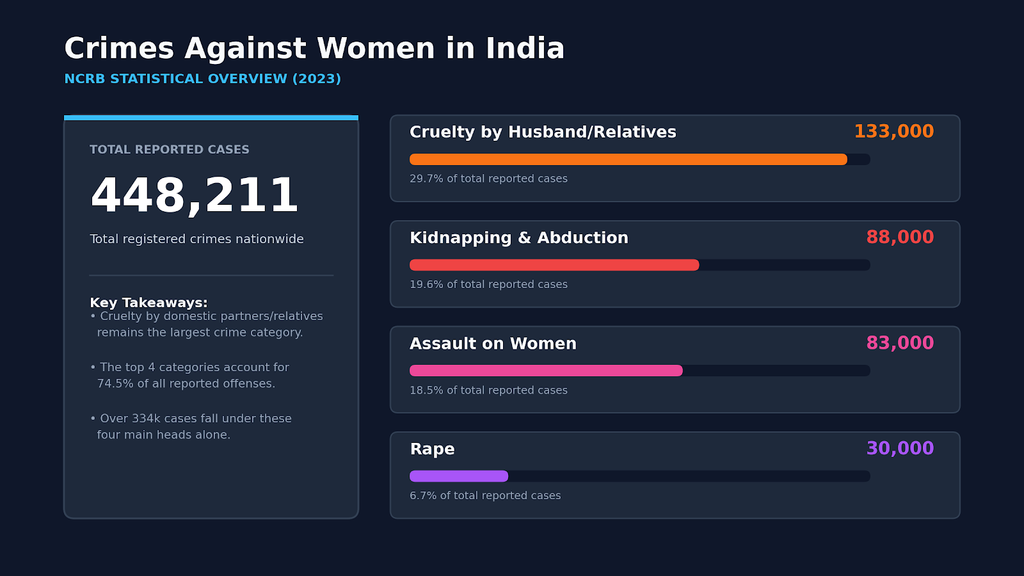
India faces high and escalating rates of interpersonal violence, sexual assault, child abuse, and accidental injuries, creating an urgent need for healthcare professionals trained to respond sensitively and legally. Forensic nurses serve as a critical bridge between medical care and judicial processes, ensuring victims receive trauma-informed, compassionate care while evidence is properly collected, preserved, and documented to support investigations and court proceedings. Their examinations are increasingly recognized in courts as reliable sources of evidence, contributing to higher conviction rates and fewer crime-scene errors. According to NCRB data the following image shows the crime rate in India-
Scope and Areas of Practice
Forensic nursing in India encompasses several specialties and practice settings:
- Clinical Forensic Nursing: Care and evidence collection in hospitals, emergency departments, and clinics for victims of assault, abuse, and trauma.
- Sexual Assault Nurse Examiner (SANE): Specialized examination and care of sexual assault survivors, including forensic evidence kits and trauma-informed support.
- Forensic Psychiatric Nursing: Care for individuals involved in legal cases with mental health needs, including assessment and rehabilitation in forensic psychiatric settings.
- Correctional/Institutional Forensic Nursing: Nursing care within prisons, juvenile homes, and other correctional facilities, addressing health needs while maintaining legal documentation.
- Community and Public Health Forensic Nursing: Outreach, education, and prevention programs addressing domestic violence, child protection, and elder abuse in community settings.
Forensic nurses may also contribute to crime scene investigation, forensic pathology, traumatology, toxicology, and death investigation, depending on training and institutional roles.
Educational Developments and Training
A major milestone occurred in 2021 when the Indian Nursing Council incorporated forensic nursing into the undergraduate nursing curriculum, introducing students to expanded roles in modern nursing practice and enhancing personal and public health safety. Graduate and postgraduate programs are being developed to bridge the healthcare judicial divide and produce specialists capable of leading forensic nursing services. Strengthening forensic nursing education requires structured training programs, simulation-based learning, clinical rotations in medico-legal units, and continuing professional development for practicing nurses.
Ethical and Legal Considerations
Forensic nurses must balance patient advocacy with legal responsibilities. Key ethical principles include:
- Trauma-informed, non-judgmental care: Prioritizing patient safety, dignity, and autonomy.
- Confidentiality and informed consent: Explaining the purpose of evidence collection and obtaining consent while respecting the patient’s right to refuse.
- Accurate documentation: Maintaining precise, objective records of injuries, statements, and evidence to withstand legal scrutiny.
- Chain of custody: Ensuring proper labelling, storage, and transfer of evidence to maintain its admissibility in court.
Nurses must also be aware of relevant laws (e.g., Protection of Children from Sexual Offences Act, domestic violence legislation) and institutional protocols for reporting and referral.
Challenges and Opportunities
Despite its potential, forensic nursing in India remains under-recognized due to limited legal authority for nurses, lack of standardized curricula across institutions, insufficient infrastructure (e.g., dedicated forensic units, evidence kits), and cultural barriers such as stigma around reporting violence. Many hospitals still rely on doctors for all medico-legal documentation, limiting nurses’ roles.
However, opportunities abound:
- Policy reforms: Advocating for clear role definitions, legal recognition, and nurse-led forensic services.
- Interprofessional collaboration: Building partnerships between healthcare, law enforcement, and judicial systems to improve victim care and justice delivery.
- Public awareness: Educating communities about available forensic nursing services and encouraging timely reporting of violence.
- Research and innovation: Conducting studies on forensic nursing outcomes, developing India-specific protocols, and integrating technology (e.g., digital evidence management).
The Way Forward
To realize the full potential of forensic nursing in India, sustained efforts are needed to expand training programs, raise public and professional awareness, advocate for policy reforms, and invest in infrastructure and research. As the specialty matures, forensic nurses will play an increasingly vital role in ensuring that justice and patient care go hand in hand, transforming India’s response to violence, trauma, and medico-legal cases.
For students who want a career that combines clinical skill with social impact, the journey begins with a strong B.Sc. Nursing foundation. If you’re exploring where to start, the B.Sc. Nursing programme at Narayana College of Health Sciences is a good place to learn more.